
RV & Mobile Home Lights in Texas | How to Get Lights On
Living in an RV or mobile home in Texas? Here's how to get your own meter installed, use prepaid lights, and what rules apply to mobile home parks.
Last updated:
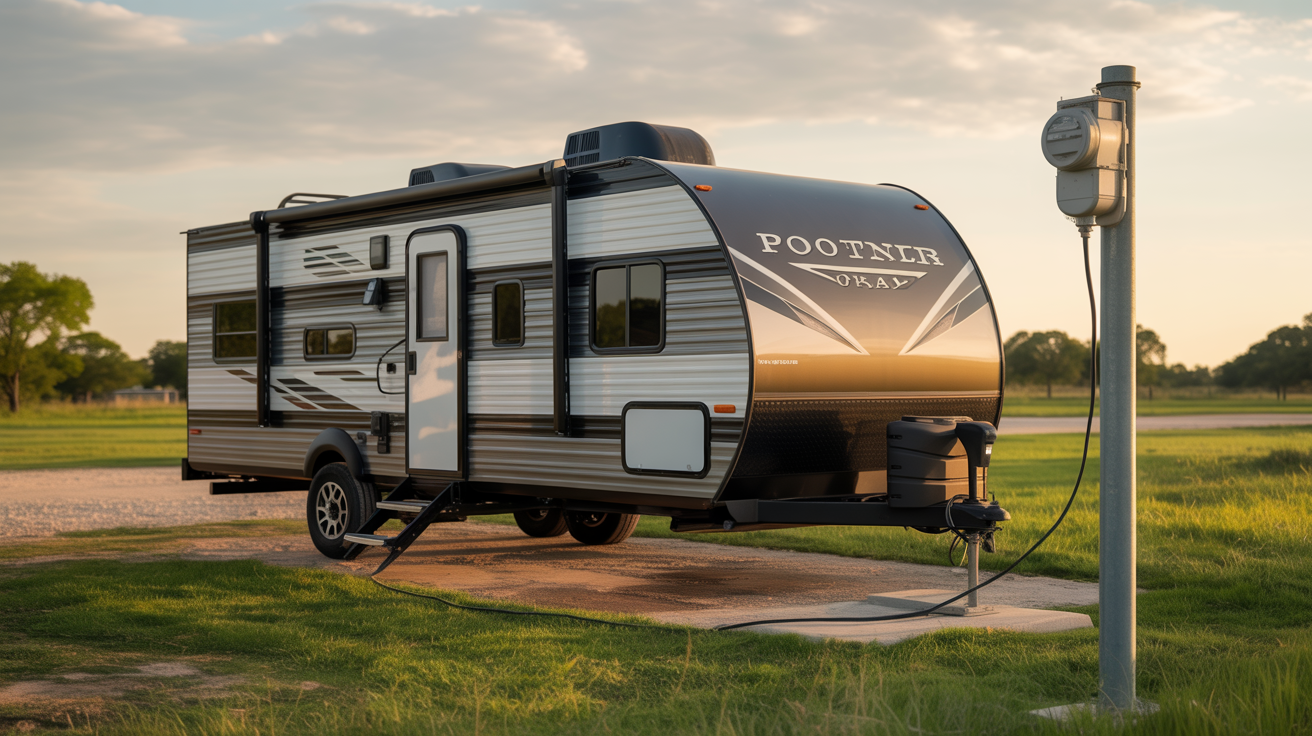
Getting lights for an RV or mobile home in Texas works a little differently than a regular house. The key question: does your setup have its own registered meter? If yes, you can pick any light company, including prepaid with no deposit. If not, you need to get one installed first.
Here’s how it works for every situation.
RV on Private Property: You Need a Meter
If you’re parking an RV on private land (yours, a family member’s, or someone letting you stay), you can’t just plug into the house and call it good. Well, you can, but it creates billing headaches and potential legal issues with the property owner’s light company.
The right way: get your own meter installed.
Step 1: Contact Your TDU
Your TDU (transmission and distribution utility) is the company that owns the power lines and meters in your area. In Texas, this is Oncor, CenterPoint, AEP, or TNMP depending on where you are.
Call them and say: “I need to install a new electric meter at [address] for an RV hookup.” They’ll tell you what’s required for your specific location.
Step 2: Hire a Licensed Electrician
This isn’t a DIY project. Texas law requires a licensed electrician to:
- Install the meter pole (sometimes called a meter pedestal or power pole)
- Run the wiring from the pole to your RV hookup point
- Make sure everything meets local code and TDU specifications
- Get the required permits from your county or city
Typical costs: $500-$1,500 for equipment and labor, depending on how far the hookup is from the road and what amperage you need (30-amp vs. 50-amp).
Step 3: Get the Meter Connected
Once your electrician installs the pole and passes inspection, the TDU comes out and installs the meter itself. This usually costs $30-$100 as a one-time connection fee.
Step 4: Choose Your Light Company
Once that meter is active, it’s just like any other address in Texas. You can pick any retail light company that serves your TDU area, including prepaid companies with no deposit and no credit check.
This is where the upfront work pays off. You’re not dependent on the property owner’s account. You control your own service. And if you ever need to move, you just cancel service like anyone else.
Got your meter installed and need lights today?
We check multiple light companies to find the best fit for your RV or mobile home. Many people qualify for traditional plans with $0 deposit (better rates). Prepaid is always available: no credit check, no deposit, lights on the same day.
Prepaid Lights for RVs and Mobile Homes
Once you have a registered meter, prepaid lights work exactly the same as they do at any other address. And honestly, prepaid makes a lot of sense for alternative housing situations:
- No deposit. You don’t need to put down $200-$400 upfront.
- No credit check. Your score doesn’t matter at all.
- No contract. If you need to move suddenly, no early termination fee.
- Same-day service. Most prepaid companies get your lights on within hours.
- You control the spending. Put in $40, use it up, add more. No surprise bills.
The trade-off is a higher rate per kilowatt-hour than a fixed-rate plan. But for RVs and mobile homes, the flexibility often outweighs the cost difference. If you’re running a home-based business out of your RV or mobile home, check our guide to small business prepaid lights in Texas for options tailored to commercial use.
Read our prepaid guide for the full breakdown of how it works, including balance alerts and what happens if you run low.
Mobile Home Parks and Manufactured Housing Communities
If you’re in a mobile home park or manufactured housing community, you might not need to worry about meter installation at all. Most parks have meters already in place for each lot.
Here’s how the billing usually works:
Option 1: Individual Meters (You Choose Your Light Company)
Some parks have individually metered lots. You set up service directly with a light company, just like you would at a house or apartment. Your name is on the account. You pick the plan. You pay the bill.
This is the best setup. You control everything and can shop for the cheapest rate.
Option 2: Sub-Metered by the Park Owner
Other parks have a master meter for the whole property, and the park owner sub-meters each unit. They buy the power in bulk, then divide the cost among residents based on individual usage.
Texas law protects you here. Under PUCT rules (16 TAC §25.142), park owners who sub-meter can’t charge you more per kilowatt-hour than what the utility charges them. They can add a small administrative fee, but they can’t profit on the markup.
If you think you’re being overcharged, ask to see the master meter bill. You have the right to verify the math.
Option 3: All-Bills-Included in Lot Rent
Some parks include lights in your lot rent. Simple, but you have no control over the rate, and there’s no incentive to conserve since you pay the same no matter what.
The Tax Exemption Most People Miss
If you’ve been living in your mobile home or RV for 30 consecutive days or more at the same location, you may qualify for a sales tax exemption on your light bill.
Texas doesn’t charge sales tax on power for “residential use.” But light companies sometimes classify mobile homes and RVs as “commercial” by default, which means you’re paying the 6.25% state sales tax plus any local taxes.
If you’re being charged sales tax and you’ve been there 30+ days, call your light company and ask them to reclassify your account as residential. You may need to provide documentation showing you live there full-time (lease agreement, mail with that address, etc.).
That’s an instant savings of 6-8% on every bill going forward.
RV Parks vs. Private Property: The Key Differences
| RV Park | Private Property | |
|---|---|---|
| Meter | Park provides hookups (20/30/50 amp) | You install your own meter |
| Who pays | Often included in nightly/monthly rate | You pay your own light company |
| Control | None (you use what they provide) | Full (you pick the company) |
| Long-term cost | Usually higher (convenience fee built in) | Usually lower once setup is done |
| Flexibility | Move anytime | Tied to the location |
For short-term stays, RV parks make sense. For long-term living (months or years), getting your own meter on private property is usually cheaper, even with the upfront installation cost.
Common Questions
”Can I just plug into the property owner’s outlet?”
Technically, yes. Practically, it’s messy. You’re using their meter, so they’re paying for your usage. That means tracking kilowatt-hours, figuring out how to split the bill, and hoping they don’t mind the extra load on their account.
Some light companies prohibit this in their terms of service. And if the property owner’s usage suddenly spikes, their company might investigate.
Getting your own meter avoids all of this. You pay your own bills. They pay theirs. Clean separation.
”Do I need permits for a meter pole?”
In most Texas counties and cities, yes. The electrician you hire should handle the permit process. That’s part of what you’re paying them for. Don’t skip this step. Unpermitted electrical work can create insurance and liability problems down the road.
Some rural counties have minimal requirements. Others want full inspections. Your electrician will know what applies to your specific location.
”How long does the whole process take?”
Plan for 2-4 weeks from first phone call to lights on. The breakdown:
- 1-2 weeks: Getting quotes from electricians, scheduling the work
- 1-3 days: Actual installation
- 1-7 days: Inspection and TDU meter installation
- Same day to 24 hours: Getting your lights turned on
If you’re in a hurry, communicate that upfront. Some electricians can expedite for an additional fee.
”What if my credit is bad?”
Doesn’t matter for prepaid. Zero credit check. Once your meter is active, you can sign up for prepaid service and have lights on the same day.
For traditional plans, different companies have different credit thresholds. Use our ZIP code lookup to see which companies serve your area and what deposit (if any) they require. You might get approved with no deposit at all. Check our deposits guide for more on how deposits work and how to avoid them.
The Bottom Line
RV and mobile home living is growing in Texas. The light companies haven’t fully caught up, but that doesn’t mean you’re stuck. If your setup has a meter, you can choose from any light company, including prepaid with no deposit and no credit check. If you don’t have a meter yet, the upfront investment to install one pays for itself in flexibility and lower rates.
Enter your ZIP code at NoDepositLights.com to see what’s available at your address. If you already have a meter, you could have lights on today for under $75.
Get Your Lights On
We check multiple light companies to find you the best option. Many people qualify for traditional plans with $0 deposit. You always have prepaid as a guaranteed fallback.
Related reading:
- How Prepaid Lights Work
- No Deposit Lights for Apartments in Texas
- Cheapest No-Deposit Light Company in Texas (2026)
This guide is for informational purposes only and does not constitute legal or financial advice. For official rules, visit the Public Utility Commission of Texas. NoDepositLights.com is powered by Compare Power (PUCT License BR190020).

Consumer Advocate
I make sure light companies treat you right. When you don't know your rights, they take advantage. I fix that.
View full profileReady to find no-deposit lights?
Enter your ZIP code and we'll show you plans available in your area. No judgment, no hassle.
Texas ZIP codes only. We'll show you no-deposit plans in your area.