
Energy Wasters Draining Your Light Bill Every Month
Find out what wastes the most electricity at home, which energy wasters hit hardest, and how to cut your light bill without buying anything new.
Last updated:
Your lights could be off for hours a day and your light bill would still be high, because the biggest energy wasters in your home never turn off.
This is not about unplugging your phone charger and saving $4 a year. This is about the real culprits behind a $200 or $300 light bill, named by name, so you know exactly where to start cutting.
What Wastes the Most Electricity at Home
Three things run your light bill up more than everything else combined: your HVAC system, your water heater, and phantom power from devices that sit on standby. Everything else is noise.
HVAC (heating and cooling): 40 to 50 percent of your bill
In a Texas summer, your AC is either the reason your lights stay on or the reason they get cut off. A unit that runs constantly because of a dirty filter, gaps around doors, or a thermostat set too cold will add $50 to $100 to your light bill before you’ve touched anything else. Changing a filter costs about $8 at Walmart. Sealing a door gap costs nothing if you roll up an old towel.
Set the thermostat to 78 when you’re home and 82 when you’re out. That single change can cut $30 to $60 a month depending on your unit’s age and your home’s size.
Water heater: 14 to 18 percent of your bill
Most water heaters are factory-set to 140 degrees. You need 120. Turning that dial down saves real money, and it takes two minutes. If your water heater is in an uninsulated garage or closet, wrapping it in an insulation blanket (about $30 at Home Depot) cuts standby heat loss by up to 45 percent.
Phantom power: 5 to 10 percent of your bill
Phantom power, sometimes called standby power or vampire power, is the energy wastage that happens when a device is plugged in but not in use. It is not zero. A cable box draws almost as much power sitting idle as it does when you’re watching TV. A gaming console in standby mode can cost $2 to $3 a month by itself.
The devices that create the most energy wastage from phantom power in the average Texas home:
- Cable or satellite box: runs 24/7, uses 15 to 30 watts constantly
- Gaming consoles (Xbox, PlayStation): 10 to 15 watts in standby
- Older TVs: 5 to 10 watts even when off
- Desktop computers left on sleep: 3 to 10 watts
- Microwaves with digital clocks: 2 to 7 watts just to show the time
- Older phone chargers: still draw power when nothing is plugged in
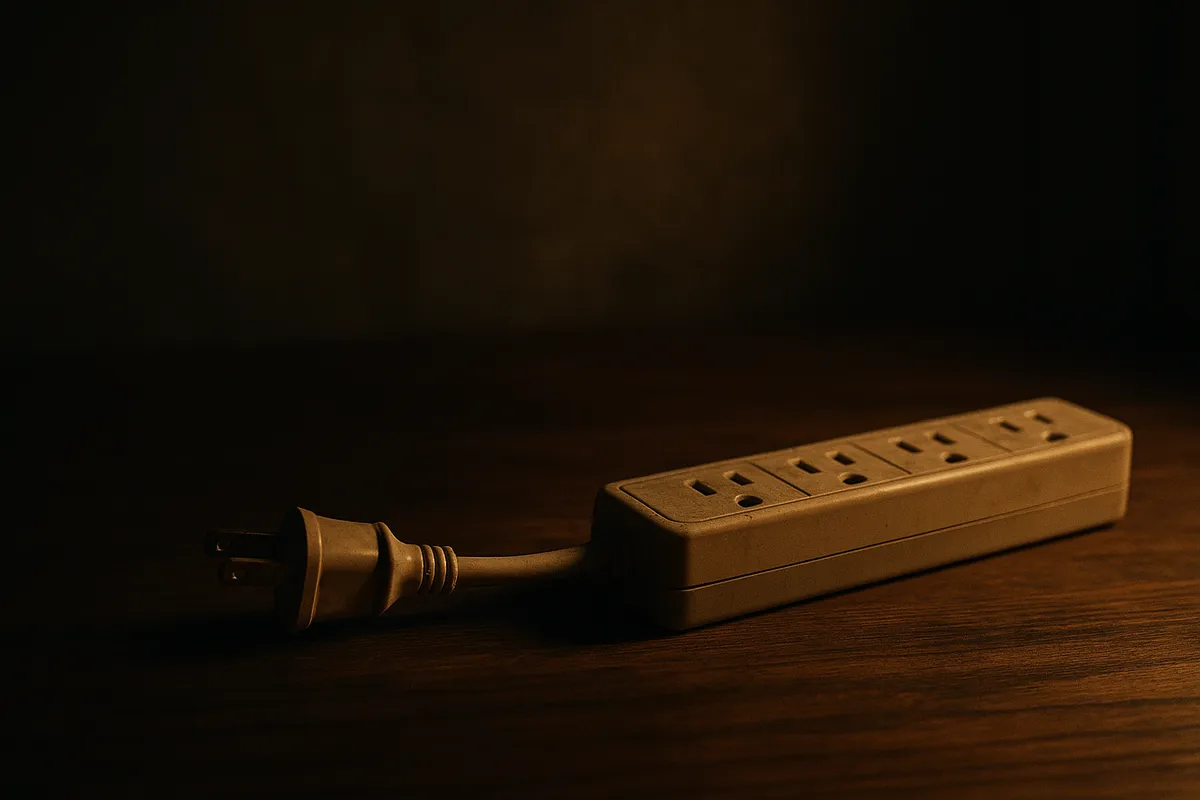
A single power strip with an on/off switch fixes all of this for the entertainment center. Turn it off when you’re done. That’s it.
The Energy Wasters People Overlook
Once you’ve handled the big three, these are the next places to look.
Old refrigerators. A refrigerator that’s 15+ years old uses roughly a third more power than a current Energy Star model — and units from the early ’90s can burn two to three times as much. If you’re renting and the fridge came with the unit, that’s not your cost to fix, but it is your bill to pay. Keep the coils clean and make sure the door seals tight.
Incandescent or older CFL bulbs. LED bulbs use 75 percent less power than incandescent. A $2 LED bulb in a lamp that runs four hours a day saves about $6 a year per bulb. If you’ve got 15 bulbs, that’s nearly $90 back. Dollar Tree carries LEDs now.
Running the dryer for full cycles on already-dry clothes. Set a timer and check at 30 minutes. Over-drying is pure energy wastage. Clothes dry faster on a full spin cycle before they go in, too.
Leaving ceiling fans on in empty rooms. Fans cool people, not rooms. A fan running in an empty bedroom all day adds about $7 a month to your light bill for zero benefit.
How This Connects to Your Light Bill Situation
If you’re on pay-as-you-go lights, energy wasters hit you immediately. You can see your balance drop faster on hot days when the AC runs long, or when someone leaves the gaming console on overnight. That real-time feedback is useful. Check your daily usage in the app and you’ll see exactly which days cost the most.
If you’re on a postpaid no deposit lights plan, you don’t see the damage until the bill lands. That’s when a $180 month quietly becomes $240 and you’re short. Knowing your energy wasters now means fewer surprises later.
Either way, the fix is the same. Start with the thermostat. Change the filter. Put a power strip on the entertainment center and flip it off at night. Those three moves alone can take $40 to $80 off a summer light bill without spending more than $15.
What You Can Do Today
You don’t need a smart home setup or new appliances. You need to stop the energy wastage that’s already happening.
- Set your thermostat to 78 right now.
- Check when you last changed your AC filter. If you can’t remember, change it.
- Count how many things are plugged in behind your TV and get a power strip with a switch.
- Turn your water heater down to 120.
- Stop leaving ceiling fans on when you leave the room.
That’s a real reduction in your light bill, starting this month.

Consumer Advocate
I help you get your lights on when other companies say no. If you've been denied or quoted a huge deposit, I know the workarounds.
View full profileReady to find no-deposit lights?
Enter your ZIP code and we'll show you plans available in your area. No judgment, no hassle.
Texas ZIP codes only. We'll show you no-deposit plans in your area.