
What Your Smart Meter Knows About You (And Who Gets That Data)
Your smart meter tracks more than your usage. Here's what data it collects, who can access it, and what you can do about it in Texas.
Last updated:
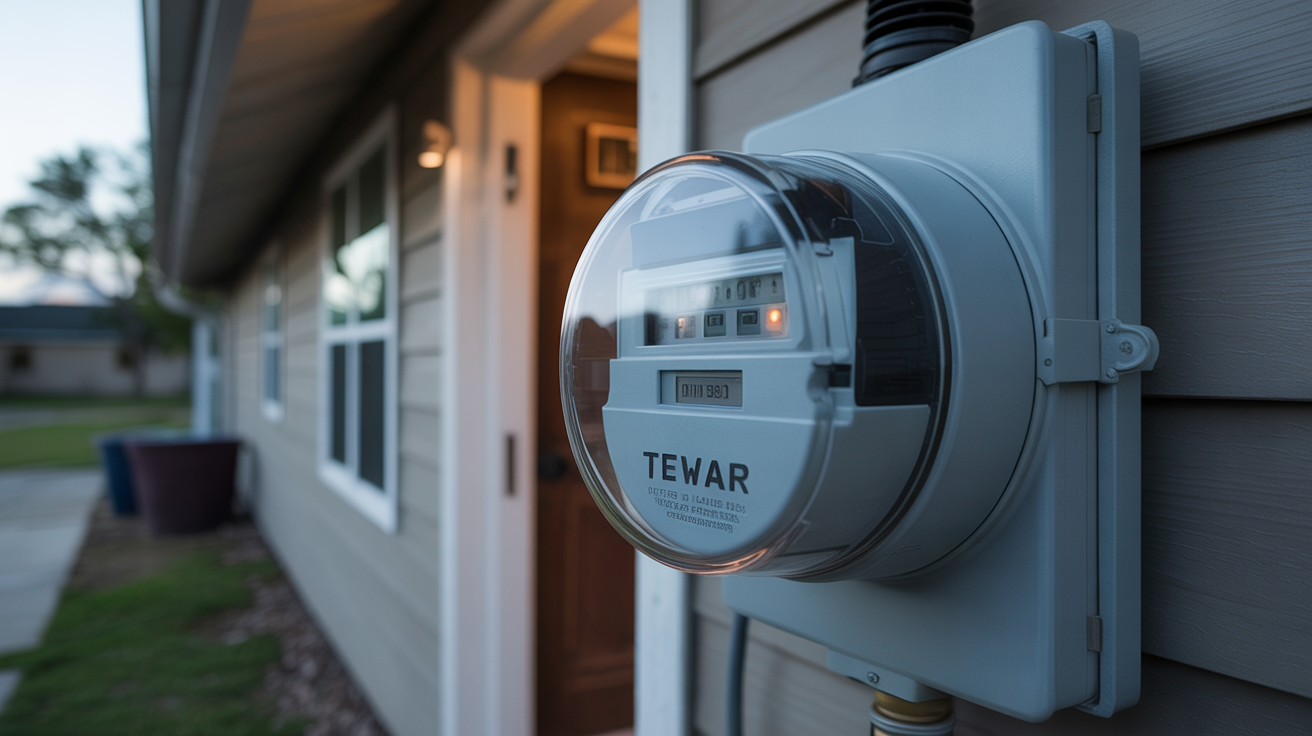
That little gray box on the side of your house is watching you. Not in a paranoid-conspiracy way. In a “it knows when you wake up, when you go to bed, and when you run your AC” way.
Smart meters replaced the old spinning-wheel meters across Texas years ago. The official reason: better grid management, faster outage detection, no more meter readers. The unofficial reality: your light company now has a detailed picture of your daily life, recorded every 15 minutes, transmitted wirelessly.
Here’s what that actually means for you.
What Your Smart Meter Tracks
Every 15 to 60 minutes (depending on your utility), your smart meter records how much power your home is pulling. That might sound boring. It’s not.
With 15-minute readings, your light company can see:
- When you wake up and go to sleep. Your usage pattern shifts. It’s obvious.
- When you’re home vs. away. Usage drops when nobody’s there. Easy to spot a vacation.
- What major appliances you’re running. AC, water heater, EV charger — anything with a heavy draw shows up clearly.
- Your general daily routine. Cook dinner at 6 PM? They know. Run the dryer at midnight? They know that too.
The good news: standard meters can’t see which TV channel you’re watching or distinguish your toaster from your hair dryer. Those claims float around online, but they require much faster sampling — like once per second instead of once every 15 minutes. Your regular smart meter doesn’t do that.
The bad news: they don’t need to see your toaster. Knowing when you’re home, when you sleep, and what your daily patterns look like is already a lot.
Who Can Access Your Data
This is where it gets messy.
Your light company has the data automatically. They use it for billing, demand management, and “value-added services” — which is corporate-speak for marketing you things based on your usage patterns.
The grid operator (ERCOT in Texas) gets aggregated data for grid management. They’re not looking at your house specifically, but your data feeds into their system.
Third parties can sometimes get access if you sign up for energy management apps, smart home services, or certain programs. Read the fine print. If something promises to “analyze your usage,” they’re getting your meter data.
Law enforcement is the complicated one. In 2018, a federal court ruled that smart meter data collection counts as a “search” under the Fourth Amendment. That sounds protective. But the court also said it was a reasonable search because the government has an interest in modernizing the grid. The takeaway: cops generally need a warrant to get your specific data, but utilities sharing data with police has happened.
In Sacramento, a utility shared smart meter data with police for over a decade to find homes with high usage — suspecting indoor grow operations. No warrants for individual homes. Just “show us everyone using a lot of power in this ZIP code.” A court finally shut it down in 2025 after it became clear the program disproportionately targeted certain communities. But it ran for years before anyone stopped it.
Texas hasn’t had a scandal like that. But there’s also nothing preventing it from happening if utilities and police decide to get creative.
Your Rights in Texas
Texas lets you opt out of some smart meter features, but the options are limited.
You can request that your utility disable the radio transmitter on your meter. This stops the wireless transmission — a human has to read it manually. But you’ll pay for the privilege. Expect an upfront fee plus a monthly charge to cover the meter reader’s time.
You can also request your own data. Under Texas law, you have the right to access your usage data. Some light companies make this easy through their app or website. Others make you jump through hoops.
What you probably can’t do: get the meter removed entirely and go back to an analog. Most utilities don’t offer that option anymore.
For a full breakdown of what Texas law says you’re entitled to — including protections against disconnection and your right to dispute charges — check out our guide to Texas electricity rights.
Can You Block the Signal?
Some people buy “smart meter shields” — basically metal mesh covers that block the radio signal. They work, in the sense that they stop transmission. But here’s the problem: your light company will notice when they stop receiving data. They’ll send someone out. If they find a shield, they can charge you for tampering, fine you, or disconnect your service.
Owning the shield isn’t illegal. Using it to interfere with the utility’s equipment is a contract violation. The result is usually the same: you lose.
Want more control over your data and your costs?
Prepaid lights don’t require your SSN or credit check — smaller data footprint, less personal information on file. Plus you control your spending by paying in advance. No deposit, lights on today.
The Privacy Tradeoff Nobody Talks About
Prepaid light plans actually give you more privacy in one specific way: your light company doesn’t have your social security number, doesn’t run a credit check, and doesn’t have a thick file on your financial history.
But they still get your smart meter data. Same 15-minute readings. Same ability to see your patterns.
The difference is what they can connect that data to. With a traditional account tied to your credit history, employment verification, and SSN, your usage data sits in a profile that includes a lot more about you. With prepaid, there’s less personal information attached to the usage patterns.
It’s not anonymity. It’s just a smaller footprint.
What This Means for Prepaid Customers
If you’re on prepaid lights — no deposit, no credit check, pay-as-you-go — your daily balance already depends on your usage patterns. You’re probably already watching how much power you use and when.
The smart meter is how your prepaid provider tracks that balance in real time. Without it, they couldn’t offer same-day service or automatic top-ups. The technology that enables prepaid plans is the same technology that tracks your patterns.
That’s the tradeoff. Faster service, no deposit required — but constant monitoring built into the system.
How to Protect Yourself (Realistically)
You can’t opt out of having a smart meter in most cases. You can’t shield it without consequences. But you can limit what the data reveals and who else gets it.
Don’t sign up for unnecessary third-party apps. Every “free energy analysis” tool wants access to your meter data. If you don’t need it, don’t grant it.
Read the privacy policy when you sign up. I know, nobody does this. But your light company’s privacy policy tells you who they share data with. Some are more aggressive than others.
Be aware of what your patterns reveal. If you’re in a situation where someone knowing your schedule could be dangerous — a stalker, an abusive ex, a threatening neighbor — understand that your light company has that information. If you have a protective order, you may be able to request additional privacy protections. Ask.
Check your state representative’s position on utility privacy. Texas hasn’t passed strong smart meter privacy laws yet. The PUC regulates utilities, but specific protections around who can access your data and under what circumstances are still vague. If this matters to you, let your representatives know.
The Bottom Line
Your smart meter isn’t spying on you in any dramatic sense. It’s not listening to your conversations or watching through your windows. But it is building a detailed picture of your daily life — when you’re home, when you sleep, what your routines look like — and transmitting that picture to your light company every 15 minutes.
For most people, that data sits in a database and nobody ever looks at it. But it exists. It can be accessed. And history shows that utilities and law enforcement have found creative ways to use it.
The meters aren’t going away. The tradeoff between grid efficiency and personal privacy is baked into modern infrastructure. What you can control is how much additional data you share, and whether you pay attention to who’s asking for access.
Your lights work the same either way. But knowing what’s happening behind the meter gives you a clearer picture of what you’re actually signing up for.
Get Your Lights On
We check multiple light companies to find you the best option. Many people qualify for traditional plans with $0 deposit. Prepaid is always available — less personal data required, no credit check.
Related reading:
- Your Rights as a Texas Electricity Customer
- How Prepaid Lights Actually Work
- Switching Light Companies in Texas: No Fee Required
This guide is for informational purposes only and does not constitute legal or financial advice. For official rules, visit the Public Utility Commission of Texas. NoDepositLights.com is powered by Compare Power (PUCT License BR190020).

Consumer Advocate
I make sure light companies treat you right. When you don't know your rights, they take advantage. I fix that.
View full profileReady to find no-deposit lights?
Enter your ZIP code and we'll show you plans available in your area. No judgment, no hassle.
Texas ZIP codes only. We'll show you no-deposit plans in your area.