
12 Ways to Lower Your Pay-As-You-Go Light Bill
Your prepaid balance draining too fast? These 12 tips can cut your daily usage by 20-30% without making you miserable. Real numbers, not vague advice.
Last updated:
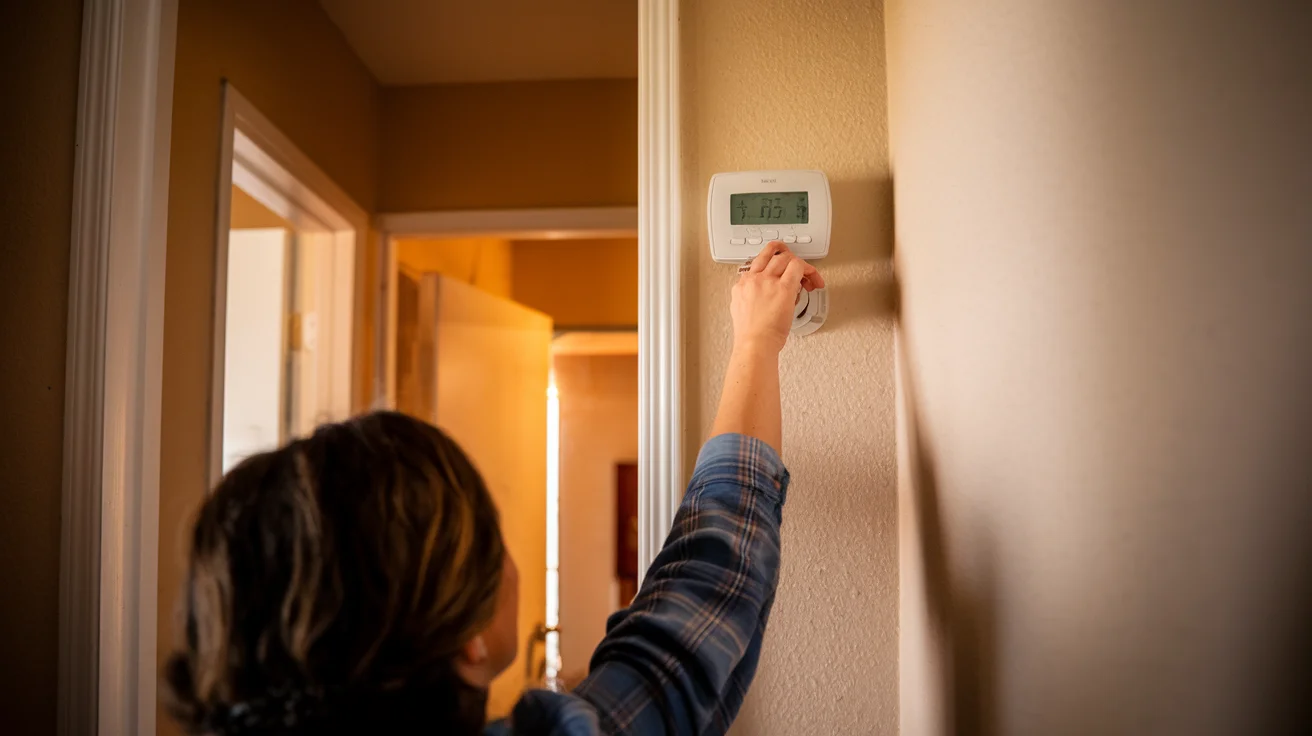
When you’re watching your prepaid balance drop $6, $8, $10 a day, it feels like the money’s just evaporating. And in a Texas summer, it kind of is. Your AC is running nonstop and your balance is the casualty.
But here’s what most people don’t realize: small changes can cut your daily usage by 20-30%. That’s $30-$60/month you keep instead of sending to the light company. Not by freezing in the dark. By being smarter about the stuff you don’t even notice.
1. Set Your Thermostat to 78 (Yes, Really)
I know. 78 sounds warm. But every degree below 78 costs you an extra 3-5% on cooling. If your AC is eating $5/day, dropping from 75 to 78 saves you roughly $0.50-$0.75 a day. That’s $15-$22/month.
Set it to 82-85 when you leave for work. Your apartment will cool back down in 20-30 minutes when you get home. Don’t turn it off entirely though. Getting a hot apartment back down to 78 costs more than keeping it at 82.
2. Change Your Air Filter
This one is almost embarrassing to list because it costs $5 and takes 30 seconds. But a clogged air filter makes your AC work 15% harder. That’s like adding $20-$25/month to your light bill for no reason.
Check your filter right now. If it’s gray and furry, change it. Then set a reminder for every 30 days.
3. Switch to LED Bulbs
If you’re still running incandescent or CFL bulbs, each one costs about $8-$15/year to run. LEDs cost about $1-$2/year each. A 4-pack of LED bulbs costs $6 at Walmart.
Switch 10 bulbs and you save roughly $60-$130/year. On prepaid, that’s a balance top-up you just didn’t need.
4. Unplug Stuff You’re Not Using
Your TV, game console, microwave, phone charger, and coffee maker are all using power even when they’re “off.” It’s called phantom load, and it adds up to $10-$20/month in most homes.
You don’t have to unplug everything. Get a $10 power strip and plug your entertainment center into it. Flip the strip off when you leave the house or go to bed. Same thing for your desk setup.
5. Run Big Appliances at Night
Your dryer, dishwasher, and oven all generate heat. When you run them during the afternoon, your AC has to work harder to offset that heat. Running them after 8 PM means less competition between appliances.
This doesn’t change the rate you pay (most prepaid plans don’t have time-of-use pricing), but it reduces total usage because your AC isn’t fighting extra heat sources.
6. Close Your Blinds on South and West Windows
Direct sunlight through a window can raise the temperature in that room by 10-15 degrees. Your AC notices, even if you don’t.
Close blinds on south-facing windows by noon and west-facing windows by 2 PM. This alone can reduce cooling costs by 5-10%. Blackout curtains work even better if you want to invest $20-$30.
7. Use a Fan Before Lowering the Thermostat
A ceiling fan or box fan makes a room feel 4-6 degrees cooler. If 78 feels uncomfortable, turn on a fan before dropping the thermostat to 76. The fan costs about 1 cent per hour to run. Your AC costs roughly 30-50 cents per hour.
Turn fans off when you leave the room. Fans cool people, not rooms.
8. Seal Your Doors and Windows
Stick your hand near the edges of your doors and windows. If you feel air moving, you’re literally paying to cool the outside. A pack of weatherstripping costs $5-$8 and takes 20 minutes to install.
If you’re renting and can’t modify doors, roll up a towel and press it against the gap under exterior doors. Not elegant, but it works.
9. Don’t Heat Your Apartment With Your Oven
Using your oven for an hour adds heat that your AC has to fight. In summer, switch to microwave, air fryer, slow cooker, or no-cook meals when possible. Your oven turns your kitchen into a furnace that takes your AC an extra 20-30 minutes to bring back down.
An air fryer uses about 1,500 watts for 15 minutes vs your oven at 2,500-5,000 watts for 30-60 minutes. The math is clear.
10. Take Shorter, Cooler Showers
If you have an electric water heater (most apartments do), your hot water is one of the biggest drains on your balance. Cutting your shower from 15 minutes to 8 minutes saves roughly $5-$10/month. You don’t have to take cold showers. Just warm instead of hot, and shorter.
11. Set Up Low-Balance Alerts
This isn’t about using less. It’s about not getting caught off guard. Under PUCT §25.498, prepaid light companies in Texas are required to notify you before disconnection when your balance gets low. Most also let you set additional text or app alerts at $10, $5, or whatever threshold you choose.
Set an alert at $15. That gives you a day or two to add funds before your balance actually hits zero. Running out of balance and getting cut off, then having to pay a reconnection process, is more expensive than adding $20 early. Read our how prepaid works guide for the full breakdown of how balance management works.
12. Get a Free Home Energy Audit
Most Texas utility companies offer free energy audits. They send someone to your house who checks your insulation, windows, appliances, and gives you a personalized list of what’s costing you money.
Call your local utility (that’s the transmission company, not your retail light company) and ask about their energy efficiency programs. CenterPoint and Oncor both offer them. Some even include free LED bulbs or weatherstripping.
How Much Can You Actually Save?
Let’s say you’re spending $180/month on prepaid lights. Here’s what a realistic savings stack looks like:
| Change | Monthly Savings |
|---|---|
| Thermostat to 78 | $15-$22 |
| New air filter | $15-$20 |
| LED bulbs (10) | $5-$10 |
| Power strip for phantom loads | $10-$15 |
| Close blinds | $5-$10 |
| Use fans first | $5-$8 |
Total: $55-$85/month
That’s aggressive. You probably won’t do all of them perfectly. But even hitting half of these drops your daily balance drain from $6 to $4-$5. Over a year, that’s $360-$720 you didn’t burn.
The Bigger Picture
Prepaid lights cost more per unit than traditional plans. That’s just how they’re priced. But a lot of that higher cost can be offset by using less. Someone on prepaid who’s careful about usage can spend less than someone on a “cheap” traditional plan who blasts the AC at 72.
If you’ve been on prepaid for a while and want to see if you qualify for a fixed-rate plan with lower rates, check our deposit checker or read about the path to traditional plans. Twelve months of on-time prepaid payments can get you there.
In the meantime, every dollar you save on your daily balance is a dollar that stays in your pocket. Start with the air filter. It’s $5 and 30 seconds.
Related reading:
- 5 Ways to Make Your Prepaid Lights Balance Last Even Longer
- Summer Survival Guide: Managing Prepaid Lights in Texas Heat
- What Happens When Your Prepaid Balance Hits $0
Get Your Lights On
We check multiple light companies to find you the best option. Many people qualify for traditional plans with $0 deposit. You always have prepaid as a guaranteed fallback.
This guide is for informational purposes only and does not constitute legal or financial advice. For official rules, visit the Public Utility Commission of Texas. NoDepositLights.com is powered by Compare Power (PUCT License BR190020).

Consumer Advocate
I cut through the BS. Light companies hide their real rates in the fine print. I show you what you'll actually pay.
View full profileReady to find no-deposit lights?
Enter your ZIP code and we'll show you plans available in your area. No judgment, no hassle.
Texas ZIP codes only. We'll show you no-deposit plans in your area.